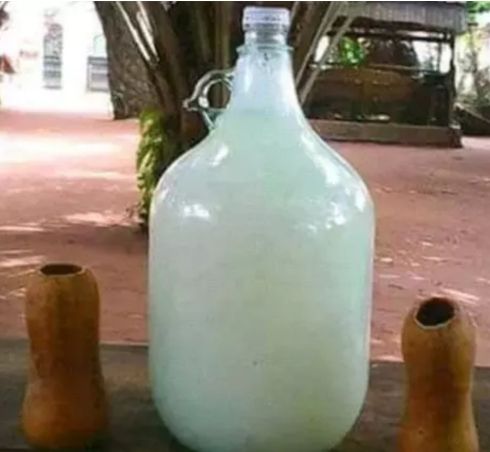
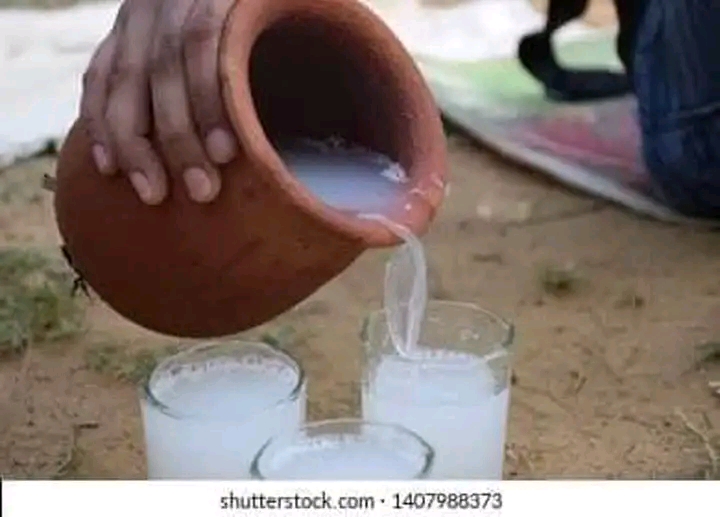
There are many traditional African drinks, each with its unique flavour and history. Some of the most popular African drinks include Palm wine. Specially found in Eastern part of Nigeria. Palm Wine is made from the sap of palm trees and it is popular in many parts of Africa. It has a sweet taste and is usually drunk by itself or with food. Palms produce a sugary sap for their growth, which is often tapped by humans and used to prepare a fermented beverage called palm wine. Palm sap is extracted from different species, including Cocos nucifera, Borassus aethiopum, and Elaeis guineensis. Tapping is done by cutting the inflorescence and collecting the sap from the injured peduncle or inserting a tube into the palms growing point in the heart of the crown and placing a container at the end of the tube to collect the sap (palm wine).
In Igbo Culture and Traditions, Ọdịnanị spirituality permits the consumption of alcohol during convivial moments or rituals which plays a significant role. One is that of pouring libation, the act of offering the spirit guides a few sips of a liquid (usually palm wine or hot drink). This is done several times a day, particularly during Igo ọfọ, activating spirits, benedictions or festive periods. Some people fill palm wine in a local cup and pour libations on their ancestors’ graves as an offering. Locally distilled palm wine is still used in offerings made to spirits.
In Igboland, to recover from smallpox, palm wine will be taken as a drink and spat on the affected person’s naked body then rubbed on the patient. Relatives were advised not to sleep near an infected person or visit anyone outside. For successful recovery it is vital to make offerings to the spirit guides by sprinkling palm wine all over the house to appease them. Ancestors spirits appreciate drinks so palm wine is used in offerings and ceremonies to obtain their favor and help appease their anger and avert other calamity. Palm wine is a valued consumable and lubricant of good relations and hospitality. It is a connector in engaging a powerful being in a relationship of beneficial exchange and prosperity in Ọdịnanị Igbo spirituality.
Alcoholic drinks are highly symbolic in indigenous spirituality. Alcohol has psychotropic properties. It is prominent in rituals. Most Igbos use beer during Chi appeasement and alignment, almost in all their ceremonies, while palm wine plays a role in traditional marriage, New year festival, Child naming ceremony, Ilo Mmụọ among others. Alcoholic drinks feature in many religions too. Whether it is beer, wine, made from agave sap, fermented drinks are highly symbolic. The complex fermentation process requires unique skill. Sometimes, alcoholic drinks and wine are used interchangeably as a sacrificial offering of animal blood to the gods and a way for people to commune with deities. Alcohol can be a symbol of excess and confusion. Moreso, palm wine remains very special and unique for ceremonial uses.
Although, Alcohol plays a crucial role in ancient rituals. It was offered as a libation and heralds the deceased on their final journey. Alcohol play a role in rites of passage, the cycles of life and seasons, for example it can induce mystical intoxication. The link between spirituality and alcohol exists today. Among the Igbo people in Eastern Nigeria palm wine (known as Nkwụ enu) is a festive drink that features in every ritual. Igbos use it to warm up the body during initiation ceremonies. It can be an offering and help people make contact with their ancestors and with supernatural powers. During spiritual appeasement and alignment rituals palm wine and hot drinks are used as psychotropic beverages to access the afterlife and make contact with the spirits, as is the case in Igboland. Alcohol is a central part of Igbo Culture, Traditions and Spirituality.
In Ọdịnanị, wine is sanctified by dropping a seed of alligator pepper inside a tot and panegyrics is rendered to the spirit guides before it is consumed as part of the ritual. This custom indicates the way of expressing joy of freedom regained, of rejoicing and eulogizing Chineke’s generosity. Hot drinks also take pride of place during the feasts of Egwu Ụmụ Ọka which commemorate celebration of their Imoka deity. During festivals, guests are encouraged to become slightly inebriated as this is seen as an expression of joy. However, from these permissive festivals, in totality consuming alcohol even in moderation, remains heavily codified.
+2347042519747
WhatsApp MSG only.
 DIBIA NWANGWU UCHENDU