Fasting is an ancient practice that has been embraced by numerous cultures and religions worldwide for centuries. Whereas the reasons behind fasting may vary across different traditions, the act of abstaining from food and drink for a specified period holds significant physiological and spiritual implications. As modern science delves deeper into unlocking the mysteries of fasting, the approach is gaining widespread attention as a potential path to improving health and well-being. In this article, we will explore the essence of fasting, its historical significance, the underlying science behind it, and the multitude of benefits it offers.
I. The Historical Significance and Spiritual Aspect of Fasting:
Fasting has long been ingrained in the cultural and religious practices of humanity dating back to ancient civilizations. It plays a vital role in numerous faiths such as Ramadan in Islam, Lent in Christianity, Yom Kippur in Judaism, Mahashivaratri in Hinduism and Ọdịnanị Igbo Spirituality. These observances connect individuals to a sense of sacrifice, self-discipline, purification, allowing for deeper introspection and spiritual growth. Fasting has also been practiced as a means of healing and rejuvenation in traditional medicine systems including Ayurveda, Traditional Igbo and Chinese Medicine and Naturopathy.
II. Exploring the Science behind Fasting:
Recent scientific research has shed light on the remarkable physiological changes that occur during fasting. Our bodies are highly adaptive, and fasting triggers a cascade of biological responses. During a fast, insulin levels decrease, allowing stored body fat to be burned for energy. Simultaneously, growth hormone levels increase, promoting cellular repair and regeneration. Autophagy, a natural self-cleaning process of cells, is also upregulated during fasting, leading to the removal of damaged cellular components. Moreover, fasting activates several genes and pathways associated with longevity, anti-inflammation and cancer prevention.
III. Benefits of Fasting: Physical and Mental Well-being:
A. Weight Loss and Metabolic Health.
One of the most visible benefits of fasting is its potential for weight loss. By reducing caloric intake and influencing metabolic adaptations, fasting can shift our body from relying on glucose for energy to utilizing stored fat. This, in turn, can help manage obesity, insulin resistance, and type 2 diabetes. Intermittent fasting, in particular has gained popularity due to its simplicity and effectiveness in weight management.
B. Enhancing Brain Function and Mental Clarity.
Fasting has been linked to cognitive improvements as it enhances brain-derived neurotrophic factor (BDNF) levels which promote the growth of new nerve cells. This boost in neuroplasticity can enhance memory, focus, and overall cognitive function. Additionally, fasting has shown promise in reducing the risk of neurodegenerative diseases, such as Alzheimer’s and Parkinson’s.
C. Promoting Cellular Repair and Longevity.
Fasting stimulates autophagy, a process crucial for cellular regeneration, repair and the removal of toxins and cellular waste. By clearing out damaged cellular components, fasting can enhance the overall cellular health, potentially extending lifespan and reducing the risk of age-related diseases.
D. Reducing Inflammation and Boosting Immunity.
Inflammatory markers tend to decrease during fasting, potentially offering relief for chronic inflammatory conditions such as arthritis, asthma and allergies. Additionally, fasting can promote the production of new immune cells, improving immune function and resilience.
IV. Approaches to Fasting:
There are various fasting methodologies.
I. Intermittent Fasting.
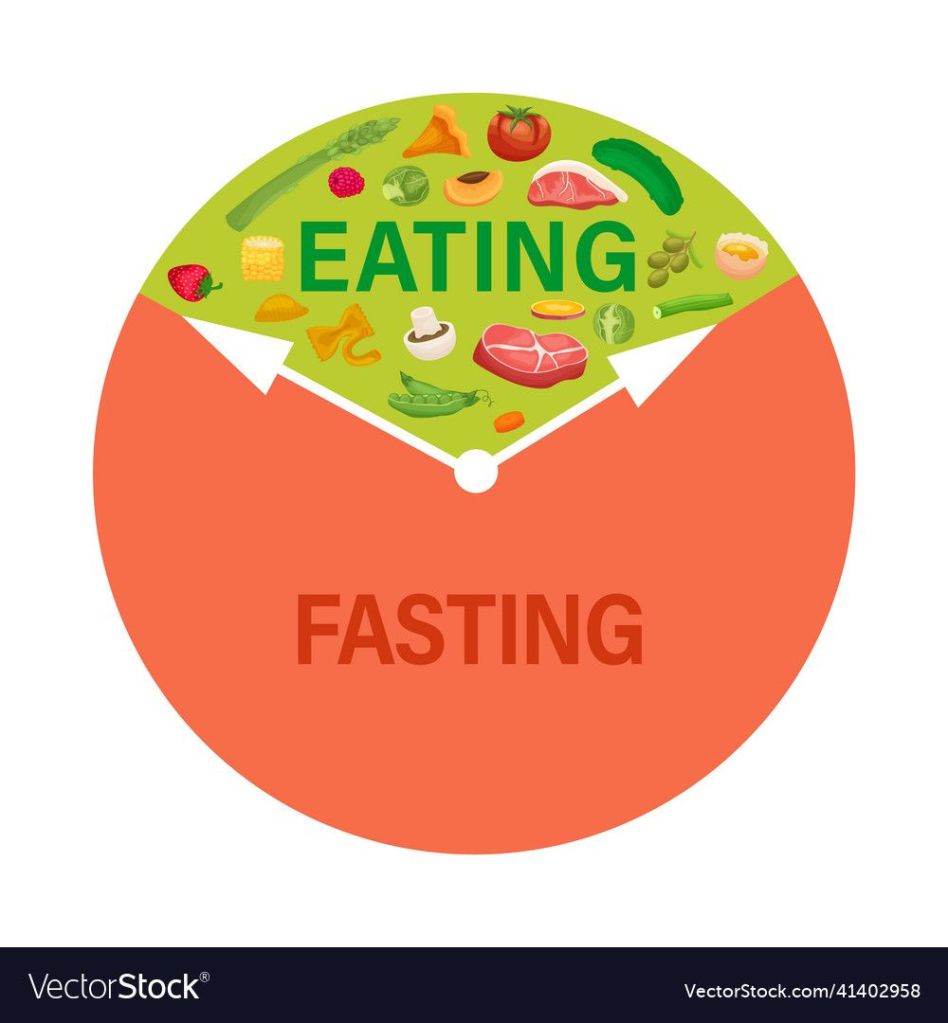
Intermittent fasting involves cycling between periods of fasting and eating. There are several popular approaches within this category:
1. 16/8 method:
This method involves fasting for 16 hours and restricting eating to an 8-hour window each day. Typically, this means skipping breakfast and only eating between noon and 8 pm.
2. 5:2 method:
With this method, individuals eat normally for five days of the week and restrict their calorie intake to 500-600 calories for the remaining two non-consecutive days.
3. Eat-Stop-Eat:
This approach involves fasting for 24 hours once or twice a week, typically from dinner one day to dinner the next day.
II. Alternate-Day Fasting.
Alternate-day fasting involves alternating between days of unrestricted eating and fasting. On fasting days, individuals typically consume very few calories, usually around 500 calories or less.
III. Time-Restricted Eating.
Time-restricted eating involves restricting the eating window to a certain number of hours each day, while fasting for the remaining hours. The most common approach is to have an eating window of 8-10 hours, followed by a fasting window of 14-16 hours.
IV. Extended or Multi-Day Fasts.
Extended or multi-day fasts involve complete abstinence from food for a longer period, usually 48 hours or more. Some individuals opt for water fasting, consuming only water during the fasting period. Others may choose to consume certain liquids like tea or broth for additional support.
It is important to note that fasting can impact individuals differently, and it is advisable to consult with a naturopath, holistic doctor, healthcare professional or a registered dietitian before embarking on any fasting regimen, especially for individuals with pre-existing health conditions. In our quest for optimal health and well-being, fasting emerges as a captivating avenue, combining ancient traditions with modern scientific understanding. This centuries-old practice offers far-reaching benefits for our physical, mental, and spiritual dimensions. However, it is crucial to approach fasting with caution and consult professionals, particularly those with pre-existing health conditions. By embracing the healing power of fasting, we may unlock a transformative journey towards vitality and a deeper connection to ourselves.
@dibianwangwuuchendu
WhatsApp MSG only.
+2347042519747
 DIBIA NWANGWU UCHENDU