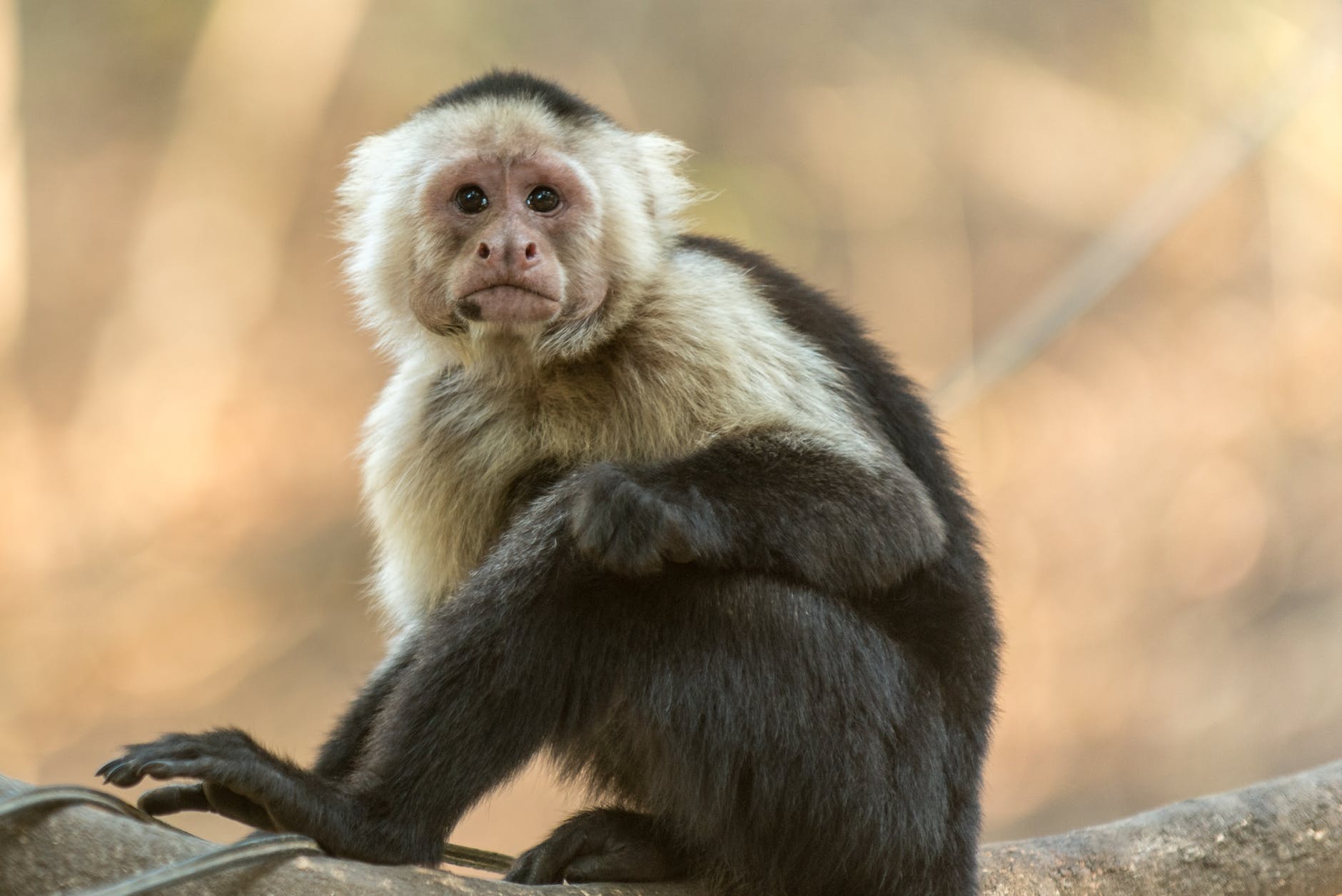
Monkey is a common name that may refer to most mammals of the infraorder Simiiformes, also known as the simians. Traditionally, all animals in the group now known as simians are counted as monkeys except the apes, a grouping known as paraphyletic, in the broader sense based on cladistics, apes (Hominoidea) are also included, making the terms monkeys and simians synonyms in regard of their scope. Monkeys are divided into the families of New World monkeys (Platyrrhini) and Old World monkeys.
Awka the ancient Smithsonians revers monkeys and forbid any harm against them because they are totems of our ancestral deity, IMOKA. Interestingly, three versions to the Awka monkey-myths exists. According to my late grandfather of blessed memory, it all began in ancient times, when hunters returning from their hunting expedition stood before the Imoka shrine to share the games of their hunt, which included a live monkey, one of the hunter suddenly remembered they had ignored to give something to Imoka deity. Which later turned out to be a live monkey to the shrine.
Nevertheless, another version which brought about why monkeys were revered, is because they assisted Awka in winning an unexpected invasion by dramatizing and displaying some war scenes and signals to Awka warriors to alert them of the impending danger. I was told by my late father, that warriors from Ndikerionwu had invaded the first village in Awka and were advancing to the next village called Umuike. On sensing the invaders, friendly black monkeys trooped out and entered the village and began to wag their tails at the indigenes warning them about the looming danger!
Another version of the myth according to my late father says, we reverence black monkeys because when we were engaged in warfare with our invaders, the monkeys worked in our interest. They gave Awka warriors assistance that helped them win the war. There are three types of monkeys in this categories: 1. The brown monkeys, 2. the milk-colored monkeys and 3. the black monkeys. “Our people noticed that the monkeys involved in the warfare were particularly black in colour and we therefore resolved to adopt and reverence it in our tradition”.
Awka ancestors decided to entrench the myth of the black monkeys into our tradition and culture which is celebrated annually as “IMOKA FESTIVAL” also known as “EGWU ỤMỤ ỌKA”. Furthermore, any one that kills any black monkey within Awka would be held accountable and responsible for committing a taboo. The person would be subjected to bury the monkey with full burial rites accorded to humans. As an Awka indigene, if you see a stranger kill a black monkey, and hide it, the Awka person would definitely be killed by the Imoka deity!
No matter the circumstances, no Awka man would intentionally or knowingly eat the meat of a black monkey. “Ọ nwere onye Öka na-asö enwe, ibie a na-elie”. The reason is because the black monkey which lived within the town among people (as opposed to the brown monkey which lived in the bush), was an animal dedicated to Imöka. Everything owned by a God is sacred and must not be touched. Visitors to Öka used to say on this custom: “Anü jul Öka aka, ewee vbe welu enwe chüöl Alüshï” (It is because Öka have surplus meat, they could consecrate the black monkey to the gods).
The story goes thus “ïkpükpa”, an animal much like the rabbit lived in the bush. It was the first animal dedicated to Imöka, but after the “Okoli Ijoma or Ada war” when the black monkey performed a service to Awka by alerting Awka people to their danger by making excited noises on the enemies approach, ïkpükpa was demoted. Thus, the black monkey was elevated to the status of a sacred animal dedicated to the gods and must not be killed. Nnomeh was a Matriarch whose clan is called Awka. Her clan initially had the ïkpükpa, later the black monkey, as its totem.
@dibianwangwuuchendu
+2347042519747
WhatsApp MSG only.
No calls 📵.


 DIBIA NWANGWU UCHENDU