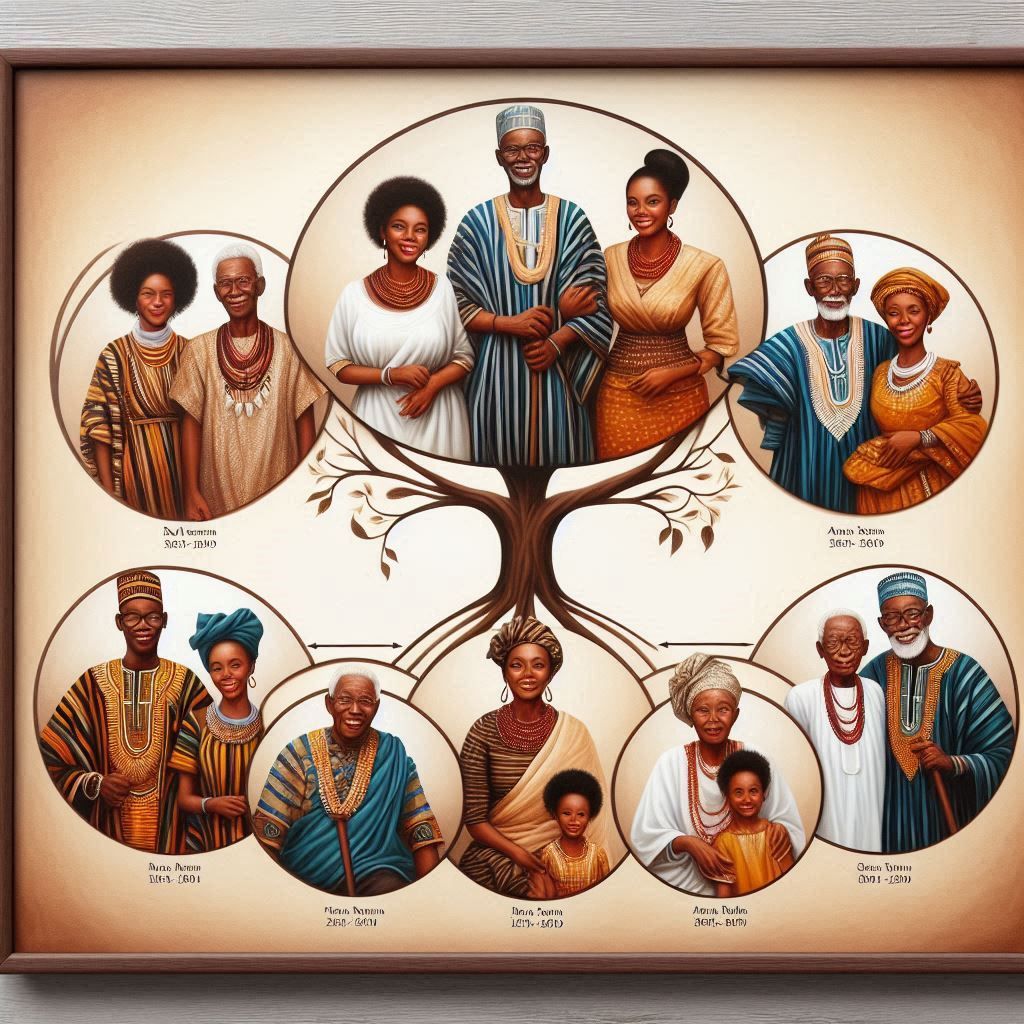
Genealogy is the study of family lineages and ancestral histories. It holds profound significance within the Igbo society. A society filled with rich cultures, traditions and diverse identities, it is good to explore one’s genealogical roots. It has become a crucial aspect of personal and communal identity. I will delve into the importance of genealogy in Igboland because it will help one in tracing one’s roots. However, it is very important in Ọdịnanị Igbo spirituality to know ones genealogy especially where there is need to summon, venerate, eulogize the ancient ones. Igbo ancestors are known as Ndị Ichie. The forebears are Ndị mbụ na Ndị Egede. Atimes, new Ọdịnanị adherents are naively lost due to colonial mentality and generational brainwashing. They know nothing about their own ancestry yet have the genealogy of their Christian Jboy off head! Amazingly, they have no ancestral link with Jboy which is very shameful. It is important to know your family’s genealogy especially one that comes from the spiritual ancestral lineage. It will help in Ọdịnanị spirituality. Infact, every nwafo Igbo should trace and know their genealogy. Learn to summon them every morning during Igo Oji ụtụtụ /Igbo mmụọ, Ndị Ichie appeasement in ancestral Obi and in other activities.
The Cultural Significance of Genealogy in Igbo society.
African and Igbo cultures have long placed immense value on the preservation and transmission of ancestral knowledge and lineages. This reverence for one’s roots is deeply embedded in the societal fabric while influencing various aspects of life, from spiritual beliefs to social structures. In Igbo society, the oral tradition plays a pivotal role in the dissemination of genealogical information. Elders are regarded as the custodians of ancestral knowledge. They are responsible for passing down family histories, clan affiliations and the origins of their people. These oral narratives are not merely recitations of names and dates; they are intricate tapestries that weave together the stories, values and experiences that have shaped the collective identity of a community. The importance of genealogy is further reinforced through the role of ancestral veneration in Igbo spirituality. Many belief systems, such as the Akan of Ghana, the Igbo of Nigeria and the Congo of Central Africa place a strong emphasis on maintaining connections with one’s ancestors. Rituals, offerings and invocations to the ancestral spirits are integral to various cultural practices. This serve as a means to honor the past, seek guidance and secure the blessings of the departed. Tracing one’s lineage not only connects individuals to their spiritual heritage but also provides a sense of belonging and identity within the larger community. The knowledge of one’s ancestors and their place in the collective narrative often determines an individual’s social status, responsibilities and access to certain privileges or resources within the community.
The Social Implications of Genealogy in Igbo Society.
Genealogy in Igbo land extends far beyond the personal realm. It play a crucial role in the social fabric of communities. The family ties, clan affiliations and ancestral connections shape and inform social dynamics, power structures and even political alliances. In Igbo society, the extended family is deeply rooted in the understanding of one’s genealogical ties. Individuals are not seen as isolated entities but rather as part of a larger kinship network. This is where obligations, responsibilities and mutual support are expected and upheld. This collective identity is reinforced through the transmission of genealogical knowledge that helps to maintain these social bonds and ensure the continuity of communal structures.
Tracing one’s lineage can have significant implications for inheritance, land ownership and the distribution of resources within a community. In some Igbo culture, the right to inherit land or acquire certain titles is directly tied to one’s position within the genealogical hierarchy. For example, the “diokpala” and the “Ada” are highly recognized, they fall under this category. The ability to clearly articulate one’s ancestral connections becomes a critical factor in securing access to these social and economic privileges. When it comes politics and leadership, the knowledge of one’s genealogical ties can also play a pivotal role. In many traditional African societies, the legitimacy of a ruler or community leader is often derived from their ability to trace their lineage back to esteemed ancestors or founding figures. This ancestral connection is seen as a manifestation of divine right and a symbolic link to the shared history and values of the community.
The Historical Significance of Genealogy in Igboland.
The importance of genealogy in alaigbo extends far beyond the cultural and social realms. It holds immense historical significance. The preservation and reconstruction of family histories and ancestral lineages have become crucial tools in understanding the complexity of the Igbo’s past. The forced migration and displacement of Igbos during the transatlantic slave trade have had a profound impact on the ability to trace one’s genealogical roots. The disruption of familial and communal structures, the destruction of historical records and the forced assimilation of enslaved individuals into foreign cultures and identities have presented significant challenges in the reconstruction of ancestral histories. Despite these obstacles, many Igbos and their descendants have undertaken the arduous task of piecing together the fragmented stories of their past. The recovery and preservation of oral histories, the analysis of genetic data and the investigation of historical documents have all played a role in this process. These efforts not only serve to reclaim personal and communal identities but also contribute to a deeper understanding of the collective Igbo experience. The study of genealogy has become a vital tool in the ongoing efforts to decolonize the historical narratives surrounding the Igbos and African continent. By centering the voices and perspectives of Igbos and Africans in the exploration of their own histories, genealogical research has the potential to challenge and reshape the dominant Eurocentric frameworks that have long dominated the academic discourse.
The Challenges and Opportunities in Tracing Igbo Genealogy.
While the importance of genealogy in Igbo society is well-established, the process of tracing one’s ancestral roots is not without its challenges. The unique historical circumstances faced by some Igbos, the diversity of cultural traditions and the varying levels of access to historical records have all contributed to the complexities inherent in this endeavor. One primary challenges in tracing Igbo genealogy is the reliance on oral traditions as the primary means of transmitting historical information. While these oral histories are rich in cultural nuance and provide valuable insights. They can be subject to variations, adaptations and potential gaps in the transmission of information over generations. The loss of elders who serve as the custodians of this knowledge can further exacerbate the challenges in maintaining the continuity of ancestral narratives. Another significant obstacle is the limited availability and accessibility of written records particularly in the transatlantic slave trade and colonial rule. The destruction, dispersal and poor preservation of historical documents, as well as the biases inherent in colonial-era record-keeping have made it difficult for many Igbos and Africans to trace their lineages beyond a certain point in time. I often come across this during spiritual consultation for people who were born abroad yet have Igbo ancestry which they traced via DNA or through reoccurring dreams. Despite these challenges, there are emerging opportunities and innovative approaches that are transforming the field of African genealogical research. The increasing accessibility of genetic testing and the growing availability of online databases and digital archives have opened up new avenues for individuals to explore their ancestral connections.
Initiatives such as the African Ancestry Research Center, the Slave Voyages database and the International African American Museum’s Center for Family History have made significant strides in providing resources and tools for individuals seeking to uncover their ancestral histories. These efforts combined with the growing interest and commitment to preserve Igbo and African cultural heritage have the potential to facilitate a deeper understanding of the diverse narratives that have shaped Igbo spirituality, culture, traditions, and African continent and its diaspora. Genealogy in Igboland holds immense cultural, social and historical significance. This served as a vital link between individuals, communities and the collective Igbo experience. The reverence for ancestral knowledge, the social implications of familial ties and ongoing efforts to reclaim and reconstruct fragmented histories all underscore the importance of this awareness. The challenges faced in tracing Igbo genealogies are formidable. The emerging opportunities and innovative approaches hold the promise of a deeper understanding and appreciation of the rich Igbo identities and experiences. Therfore, embracing the power of genealogical research, Igbos and their descendants can reclaim their narratives. They can strengthen their communal bonds and contribute to the decolonization of historical discourse. The journey of exploring one’s roots in Igboland is not merely an individual pursuit; it is a collective endeavor that has the potential to shape the future by honoring the past. This will undoubtedly serve as a testament to the resilience, the diversity and the enduring spirit of Igbos and Africans.

+2347042519747
WhatsApp MSG only.
 DIBIA NWANGWU UCHENDU