The Profound Significance of Names in Igbo Cosmology.
The Igbo worldview is characterized by a profound interconnectedness between the visible human world, known as Uwa mmadu, and the invisible spirit world, Uwa mmuo. This cosmology posits that the boundaries between these realms are permeable, facilitating continuous interaction and influence. This dynamic interplay is fundamental to comprehending the intricate role of names within Igbo society. The cosmos itself is meticulously structured, encompassing creation (Okike), supernatural forces or deities (Alusi), various gods and spirits (Mmuo), and the earthly world (Uwa). From this holistic perspective, human actions, particularly the deeply significant act of naming, carry substantial spiritual ramifications and contribute to the maintenance of cosmic balance.
In Igbo culture, names transcend their function as mere labels; they are considered “expressions of the nature of that which they stand for,” inherently imbued with meaning and power. These names serve as rich repositories of Igbo proverbs, historical narratives, and profound spiritual beliefs, thereby firmly identifying the bearer as an integral member of Igbo society and carving out their unique space within the community. It is understood that a name signifies an individual’s identity, shapes their destiny, and reflects their character, ultimately influencing their life path. The meticulous selection of a name is a deliberate and thoughtful act, reflecting the circumstances surrounding a child’s birth, the spiritual convictions of the parents, the family’s historical narrative, expressions of gratitude to the divine, and fervent aspirations for the child’s future. The pervasive belief that “people’s names follow them directly or indirectly” underscores the profound spiritual weight and enduring influence attributed to the naming process.
The consistent emphasis throughout Igbo cultural practices that names are not arbitrary identifiers but rather embody deep meaning, reflect destiny, and signify spiritual connection suggests a foundational principle: the act of naming is an act of cosmological inscription. Each individual name, by incorporating elements of the Igbo worldview such as Chi (personal spirit), Chukwu (the Supreme Being), and ancestral ties, becomes a microcosm of Igbo cosmology. This deep integration implies that personal identity in Igbo culture is fundamentally spiritual and communal, extending far beyond a Westernized notion of individual selfhood. It points to a continuous, lived experience of cosmology, where the spiritual realm is not an abstract concept but is actively woven into the very fabric of daily life, commencing with the conferral of one’s name. This makes the name a foundational key to understanding an individual’s place within the entire spiritual universe.
Foundational Spiritual Concepts in Igbo Society.
Understanding the spiritual landscape of Igbo society is crucial for appreciating the role of names. This landscape is populated by a hierarchy of spiritual entities, each with distinct roles and relationships with humanity.
Chukwu: The Supreme Being and Creator
Chukwu, often referred to as Chi-ukwu (Great Chi) or Chineke (God the creator), stands as the singular, ultimate God who presides over all other personal gods and spirits in Igbo cosmology. As the supreme deity within Odinani, Chukwu is recognized as the creator of the entire universe and everything within it, exercising ultimate supervision over all aspects of the earthly world, heaven, and the spiritual realm. Chukwu is described through a variety of praise names and titles that highlight His omnipotence and transcendence, such as Obasi bi n’elu (Spirit that dwells above), Olisa bi n’elu (Lord who lives above), Igwe ka ala (Heaven that is greater/higher than earth), and Ama-ama-amasi-amasi (One who is known but never fully known), emphasizing His unknowable greatness. While Chukwu holds supreme authority, He is generally perceived as distant from the minutiae of human existence. He delegates the management of daily affairs to various spirits (Alusi) and ancestors, who function as His direct messengers and intermediaries. Consequently, direct sacrifices to Chukwu are rare, though specific instances, such as offerings of white chickens, may occur.
Chi: The Personal Spirit, Destiny, and Guardian
The concept of “Chi” is multifaceted and central to Igbo spirituality, variously described as a personal spirit, guardian spirit, or an individual’s personal God. It is understood as “the God within them, or the piece of God within them,” which guides an individual into the world for a specific purpose or destiny. Every individual is endowed with a Chi at birth, which remains with them throughout their earthly life. This Chi profoundly influences one’s life path, shaping destiny and aligning with personal willpower and decisions. The popular Igbo saying, “Onye kwe chi ya ekwe” (When a man says yes his chi will also agree), vividly illustrates the dynamic balance between destiny and personal agency. It implies a co-creative relationship where individual effort and choices are crucial in actualizing one’s destiny. Crucially, a child is formally dedicated to their Chi at birth, establishing the Chi’s role as their lifelong spiritual guide and protector.
Alusi: Deities and Nature Spirits
Alusi are powerful supernatural forces or deities that inhabit all dimensions of the cosmos: the sky, the earth (including land and water bodies), and the ancestral world. They are often regarded as “spirit-servants” or “God’s agents” of Chukwu, acting as intermediaries in human affairs. Prominent Alusi include Ala (Ani), the earth goddess (considered the most important divinity after Chukwu), Amadioha (god of thunder and lightning), Nfijoku (yam god), Anyanwu (sun deity), and Ikenga (spirit of strength and success). Alusi are venerated in community shrines, and in some cases, an Alusi can become a personal “chi” if specifically assigned to an individual.
Ndichie (Ancestors): The Living-Dead and their role
Ancestors are profoundly revered as “dead-living forebears,” believed to be alive and active in the spirit world, and central to the cyclical existence of human beings in the Igbo worldview. They are understood to actively influence the material world and the lives of their living descendants. The birth of a child is often viewed as the reincarnation of a part of an ancestor’s spirit. However, not all deceased individuals attain ancestral status; only those who lived virtuous lives, did not die from inexplicable diseases, and received proper burial rites are eligible to become revered ancestors and reincarnate. Ancestors are honored, rather than worshipped in the strict sense, and a reciprocal relationship is expected: they are anticipated to reciprocate the honor by protecting and blessing the living. They are regularly invoked in prayers and libations, particularly at family shrines (òbí/òbú), with the patriarchal head of the household leading these venerations.
The spiritual hierarchy in Igbo cosmology, moving from Chukwu to Alusi, Chi, and Ndichie, establishes a structured yet deeply relational system. Chukwu, while supreme, remains distant, entrusting the direct management of earthly affairs to Alusi and ancestors, who serve as divine messengers. The personal Chi is intimately linked to an individual’s destiny, and ancestors are believed to reincarnate and actively engage with the living. This multilayered spiritual system implies that spiritual access is not a monolithic act but requires a nuanced understanding of which entity to approach for a given need. Names, by incorporating elements of Chukwu, Chi, and ancestral lineage, inherently link individuals to this complex spiritual network. Thus, the name itself becomes a crucial map or directory of an individual’s spiritual connections and potential points of access, guiding them on who to invoke for specific blessings, protection, or guidance. This intricate design underscores the importance of precise spiritual communication.
Furthermore, the concept of Chi determining fate and destiny, juxtaposed with the proverb “Onye kwe chi ya ekwe,” reveals a sophisticated understanding of human agency. This is not a rigid predestination but rather a collaborative relationship where personal will, effort, and decisions are essential. The Chi guides the individual, but the individual also exercises free will in making choices. This highlights a sophisticated understanding of human agency within Igbo cosmology. Names, especially those embodying the ‘Chi’ concept, serve as constant reminders of this delicate balance between inherent destiny and personal responsibility. They are not just declarations of a pre-determined fate but also affirmations of personal potential and the imperative to align one’s actions with one’s divine purpose. In this sense, a name acts as a key not just to a pre-determined path, but to unlocking and actualizing one’s potential within that path through conscious effort and alignment.
The Power and Meaning Embedded in Igbo Names.
Igbo names are far more than simple labels; they are profound linguistic and cultural artifacts, deeply imbued with spiritual meaning, historical context, and personal aspirations. Their construction reflects a complex interplay of theological beliefs, societal values, and individual circumstances.
Personal Names
A significant proportion of Igbo names incorporate theophoric elements, primarily “Chi” or “Chukwu” (meaning God), thereby forming names with profound religious connotations. Examples abound, such as “Chidinma” (“God is good”), “Chiemeka” (“God has done a great thing”), “Chizaram” (“God answered me”), “Chukwudi” (“God lives”), “Chukwunyelu” (“God gave”), “Chukwuma” (“God knows”), and “Chukwuka” (“God is greatest”). These names are not merely linguistic constructs; they are expressions of deep religious devotion, acknowledging God’s omnipotence, expressing profound gratitude, and affirming a personal belief in the divine. Names like “Chimamanda” (“My personal spirit will never fail me,” or in a Christian context, “my God will never fail”) exemplify the deep-seated belief in the intrinsic connection between an individual’s identity and their Chi.
Igbo names are intentionally chosen to reflect desired attributes or character traits that parents wish for their child to embody. For instance, “Obinna” translates to “Father’s heart,” signifying a beloved son or one who embodies paternal qualities. While not a personal name in the conventional sense, the concept of Ikenga is deeply intertwined with individual destiny and power. Ikenga, a cult figure representing strength and success, is linked to one’s Chi and destiny. It embodies “the power one feels or the hyper-self one unlocks when doing what one is brought into the world to do”. Names can implicitly or explicitly aim to evoke such inherent potential. Names can also serve a prophetic function, given as a prayer or blessing for the child’s future, or even as a means to counter foreseen negative omens. Examples include “Ifechukwu” (The light of God) or “Chibuike” (God is strength), which are declarations of divine influence and desired outcomes.
The circumstances surrounding a child’s birth, the parents’ emotional state, and their fervent hopes significantly influence the chosen name. Examples include “Chinyere” (“God gave”), often given to a child born after a long period of waiting; “Ngozi” (“Blessing”); and “Ugochukwu” (“God’s glory”). Names such as “Nkiruka” or “Azuka” (both meaning “the future will be better/best”) express optimism and aspirations for a brighter future. In instances of high infant mortality, names like “Ozoemena” or “Anigbata” are given as fervent pleas for divine intervention to prevent future tragedies. “Obianuju” signifies a child born into a period of wealth or abundance. Intriguingly, some names are employed to express defiance or protest against perceived injustices or aggressors, such as “Chinasaramokwu” (“God replies my mockers”).
Ancestral Names and Lineage
Igbo names are profoundly interlinked with family lineage and ancestry, serving as a vital mechanism for transmitting cultural heritage and preserving familial identities across generations. The patrilineage, known as Umunna, forms the bedrock of social organization, with descent meticulously traced from a founding ancestor. Names such as “Nwanneka” (“my siblings are supreme”) explicitly underscore the paramount importance of family ties and kinship.
A core belief in Igbo spirituality is reincarnation, where a portion of an ancestor’s spirit is believed to reincarnate into a newborn child. Naming a child after an ancestor is a deliberate act to maintain a robust spiritual link to the past, affirming the continuous presence and influence of ancestors in the lives of the living. Examples include “Nnanna” (Father’s Father), “Nnamdi” (My Father lives), and “Nnenne” (Mother’s mother). This practice is seen as a way of ensuring the ancestor’s legacy endures and serves as a constant reminder to the community of the blessings bestowed by the ancestral spirit.
The Umunna represents the male line of descent from a common founding ancestor, comprising groups of closely related families. The patriarchal head of the household bears the crucial responsibility of venerating patriarchal ancestors through regular libations and offerings at the family shrine (òbí/òbú), thereby maintaining vital contact between the living and the deceased. The sacred symbol of ancestral authority, Ofo, is meticulously handed down through the first-born sons of each family, reinforcing the profound spiritual and social importance of lineage.
Igbo names encapsulate not only spiritual beliefs but also specific circumstances of birth, parental hopes, prayers, and even serve as expressions of social protest. This indicates that Igbo names are dynamic, evolving narratives that capture both individual biographies and communal experiences. Names given to counter bad omens or to express defiance suggest a performative, rather than merely descriptive, function—they are active agents in shaping reality or challenging adversity. The emphasis on names reflecting “the nature of that which they stand for” also positions them as a form of social contract or expectation placed upon the individual. This indicates that names serve as a powerful, living mechanism for cultural transmission, social cohesion, and the reinforcement of ethical norms. They embed historical memory, collective aspirations, and moral frameworks directly within individuals. Thus, a name functions as a key not only to spiritual entities but also to the collective consciousness, historical continuity, and shared values of the Igbo people, ensuring that individuals carry their heritage and community expectations with them.
The consistent emphasis on deep reverence for ancestors, the belief in reincarnation, and the practice of naming children after ancestors clearly indicates that lineage is not merely a biological or social construct but a profoundly sacred, living connection to the spirit world. The central role of the Umunna in ancestral veneration and the symbolic passing down of Ofo further solidifies this spiritual dimension of lineage. This suggests that the ancestral name, by embodying the collective identity and power of the lineage, becomes a direct and potent conduit to a collective spiritual power bank. This implies that an individual’s spiritual power and access are not isolated or purely personal but are deeply communal and historically rooted. One’s key to spiritual power and favor is inextricably linked to the strength, integrity, and continuity of their ancestral line. This reinforces collective responsibility and the critical importance of maintaining proper rites and honoring ancestors, as the spiritual well-being and prosperity of the living are directly tied to the honor and active engagement with the deceased.
Table 1: Common Igbo Name Elements and Their Spiritual Meanings
| Igbo Element | Literal Meaning | Spiritual Connotation/Significance | Example Name |
|—|—|—|—|
| Chi | Personal Spirit/God | Destiny, Divine Guidance, Personal Guardian, Co-creation with Free Will | Chimamanda |
| Chukwu | Great God | Supreme Being, Creator, Omnipotence, Source of All | Chukwuemeka |
| Nna | Father | Ancestral Authority, Paternal Lineage, Divine Father | Nnamdi |
| Nne | Mother | Maternal Lineage, Nurturing, Earthly Connection | Nneka |
| Ugo | Glory/Eagle | Nobility, Victory, Divine Favor, Aspiration | Ugochi |
| Ife | Thing | Divine Gift, Good Fortune, Circumstance of Birth | Ifeoma |
| Obi | Heart | Inner Self, Character, Emotional State, Family Core | Obinna |
| Ngozi | Blessing | Divine Favor, Good Fortune, Prosperity | Ngozi |
| Uche | Will/Thought | Divine Will, Human Intellect, Purpose | Uchenna |
| Ike | Strength/Power | Divine Power, Personal Strength, Resilience | Ikechukwu |
| Ndu | Life | Vitality, Longevity, Divine Preservation, Continuity | Ndubuisi |
Names as Spiritual Access Points: Rituals of Conferral and Connection.
The conferral of names in Igbo society is not a casual event but a deeply ritualized process, serving as a primary mechanism for integrating individuals into the spiritual and social fabric of their community. These ceremonies are critical junctures where names become active keys to spiritual access.
Iguaha (Naming Ceremony)
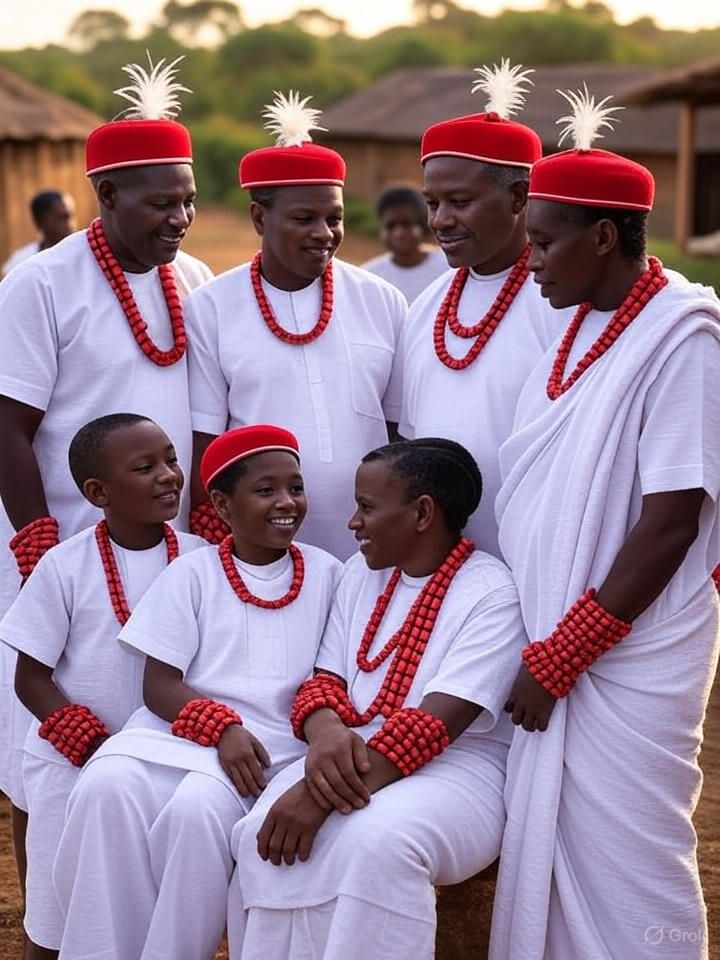
The Igbo naming ceremony, known as “IguAfa” or “AfaUkwu,” is a deeply rooted and longstanding tradition, integral to the people’s history and spirituality. It is recognized as a critical rite of passage, marking the newborn’s formal entry into the human and spiritual community. Traditionally, the timing of this ceremony is significant: it typically occurs seven days after birth for a boy and eight days for a girl, numbers imbued with symbolic meanings in Igbo spirituality. Some accounts also mention a twelve-day period. The ceremony formally introduces the newborn to the community, family, and, crucially, to the ancestors, signifying their integration into the social and spiritual fabric of the Igbo world.
A pivotal aspect of the traditional naming process involves consulting a diviner (IgbaAgu) after the baby’s birth. This consultation aims to identify “which of the ancestors reincarnated through the new baby”. This identification is paramount for determining the appropriate name for the child, ensuring alignment with their spiritual lineage. This practice underscores the belief that the child is not merely a new individual but a continuation of an ancestral spirit, making the name a direct link to that lineage.
The ceremony commences with an elder family member from the paternal lineage blessing and breaking a kola nut. This act is a direct spiritual invocation, “calling forth the ancestors and family deities, seeking their protections and blessings on the child and living family”. Symbolically, pieces of the kola nut are offered to the ancestors, with the remainder shared among the living participants. Kola nut offerings (ị́gọ́ ọ́jị̀) are central to Igbo spiritual communication, used to honor Chukwu, Chi, various Alusi, and ancestors, and even to profess innocence. During the ceremony, elders actively invoke blessings and guidance from both ancestors and deities, emphasizing the collective spiritual engagement.
Traditionally, a sacrifice—a cock for a boy or a hen for a girl—is offered to the ancestors at the family shrine as part of the naming ritual. This sacrifice is a direct appeal to ancestors to protect the child and grant them a long and prosperous life. The communal meal prepared from the sacrificed animal holds profound symbolic meaning, signifying communion between the living and the dead, as well as between the human community and the gods and spirits. This act formally seals the child’s incorporation into the Umunna (patrilineage) and the broader community. These sacrifices are often described as a “peace offering,” where the community collectively prays for the well-being of the child and the health of the parents, highlighting their communal and protective nature.
Dedication to Chi
In traditional Igbo culture, a child is formally dedicated to their personal chi at birth. This chi is understood to be responsible for the child’s lifelong guidance and protection. The name given to the child often directly reflects this dedication and their unique connection to their Chi, serving as a constant reminder of this spiritual bond. The Chi is not merely a concept but an active personal deity or spiritual guide that profoundly influences an individual’s life journey. It is the personification of an individual’s fate, directly impacting their successes, misfortunes, and failures throughout life. A key aspect of Igbo spiritual practice is the pursuit of knowing one’s destiny and unlocking one’s Ikenga (personal power/hyper-self) to effectively tap into their divine potential. The Chi is the inherent guide in this lifelong quest.
The consistent description of the naming ceremony (Iguaha) as a “critical rite of passage” that formally introduces the child to the community, family, and ancestors indicates its profound significance beyond a mere social event. The consultation with diviners to identify reincarnated ancestors directly links the individual’s identity to the ancestral realm, making this connection explicit and ritually confirmed. Furthermore, the kola nut rituals and animal sacrifices are not just symbolic gestures but explicit acts of communication and communion with the spiritual world, sealing the child’s place within this cosmic order. The naming ceremony, through its intricate ritualistic use of names and offerings, functions as the primary event that activates an individual’s spiritual connection. It establishes the child’s spiritual coordinates, linking them irrevocably to their personal Chi, their specific ancestral line, and the broader pantheon of deities. The name conferred during this ceremony is thus a key that unlocks their inherent place and potential within the Igbo spiritual cosmos, making them a full, recognized participant in the ongoing dialogue and reciprocal relationship between the living and the spiritual realms.
The emphasis on sacrifices offered during naming ceremonies being intended to “invoke ancestors to protect the child and grant a long life” is crucial. Similarly, the statement that ancestors are “honored” and “expected to come back to reincarnate and ‘do to the living members what they did for them’” highlights a clear reciprocal dynamic. This is not a passive act of appeasement but an active engagement based on mutual benefit: honor and offerings from the living are expected to yield tangible protection, blessings, and continued guidance from the spiritual entities. This suggests that the spiritual key (the name and its associated ritual conferral) is not a one-time key that grants permanent access. Instead, it requires ongoing maintenance and nurturing through reciprocal acts of veneration and sacrifice. The spiritual connection established at birth needs to be actively sustained and strengthened throughout an individual’s life, emphasizing the continuous, active role of the living in cultivating and sustaining their spiritual well-being and ancestral favor. This makes the spiritual relationship a dynamic, co-dependent one.
Invocation and Utilization of Names in Igbo Spiritual Practices and Sacrifice
The power of names in Igbo society extends beyond their conferral, actively shaping daily spiritual practices, prayers, and sacrificial rituals. Names serve as precise addresses and conduits for communication with the divine and ancestral realms.
Prayers and Libations
Igbo prayers are characterized by direct and explicit invocation of various spiritual entities, including Chukwu, the spirits (Alusi), and ancestors. The patriarchal head of the family traditionally offers morning prayers to the supreme being on behalf of his entire household, demonstrating a collective spiritual engagement. Crucially, specific ancestral names are directly called upon in prayers. For instance, in a morning prayer, names like “Agu, Okaibe, Ogbaugu, and Ezenna” are invoked, and kola nuts and prayers are offered to them. This highlights a highly personalized and direct form of communication with specific ancestral entities. Similarly, various deities such as Ala, Amadioha, Anyanwu, and Ifejioku are invoked by name during prayers and rituals, directing the spiritual energy and petition to the appropriate power. Individuals may spontaneously invoke the name of a spirit or Chukwu when facing danger, experiencing joy, or approaching a sacred shrine, indicating an active, ongoing spiritual dialogue in daily life. The use of praise names (aha otito) and reverential titles for both universal forces and community members further reflects the profound interconnectedness of the divine and mundane realms. These names are not merely honorifics but rhetorical tools employed to gain favor or enlist the support of the invoked being.
Kola nut (ọ́jị̀ Ìgbò) offerings and accompanying prayers (ị́gọ́ ọ́jị̀, ‘kola nut blessing’) are fundamental to Igbo spiritual practices. These rituals can be performed individually, addressing one’s personal Chi, or collectively, involving Alusi and ancestors. The popular saying, “O wetalu oji wetalu ndu” (“one who brings kola brings life”), underscores the profound auspiciousness and life-affirming power attributed to the kola nut rite. The ritualistic breaking and sharing of kola nut in ceremonies symbolize goodwill, a clear mind, and pure intentions, with the belief that all words uttered during this act emanate from the heart, ensuring sincerity in spiritual communication.
Spiritual Sacrifice (Ichu Aja)
Sacrifice is a cornerstone of Igbo religious life. It is understood as a sacred act where an object, or sometimes a life, is offered to supernatural beings with the aim of establishing, maintaining, or restoring a harmonious relationship between humans and the pure or perfect cosmic order. It is considered an essential means of vital force restitution. Sacrifices are performed for various purposes: expiation of sins, protection from misfortune, petitioning for assistance, and offering thanksgiving. Specific forms include: atonement (to make amends for abominable offenses against Ala, ancestors, or clansmen), defense against unknown evil forces, petition (for blessings such as childbirth, bountiful harvests, good health, or new marriages), and thanksgiving. These sacrifices often serve as preliminary rites, preceding larger public rituals and ceremonies.
The efficacy of sacrifices is intrinsically linked to the verbal component. While offering sacrifices, specific words, incantations, and prayers are meticulously uttered. The “word” itself is deemed indispensable, believed to imbue commands with force and to dispel unwanted spirits. Both individual and collective intentions for a particular sacrifice must be clearly and verbally declared to the spiritual entities. Ritual poems, for instance, are explicitly “directed towards benevolence forces or spirits like God, land, water, mountain, sun, moon, Amadioha, whose names vary from community to community in Igbo, gods, and ancestors”. The precise naming of deities and ancestors during sacrifices is crucial for directing the offering and ensuring its intended effect. For example, invoking Amadioha by name in times of war is believed to activate his specific powers.
Ichu Aja, a traditional Igbo ritual involving offerings and sacrifices to spiritual forces, is conceptualized as a “spiritual key” that facilitates profound communication between the living and ancestors. Beyond mere communication, Ichu Aja is believed to “unlock ancestral memories and allow ancient wisdom to flow into the present,” thereby rejuvenating consciousness. The offerings are made with the intent to harmonize energies between the physical and spiritual worlds, which in turn initiates the flow of long-forgotten ancestral memories into the practitioner’s consciousness. This practice enables practitioners to access a vast reservoir of ancestral intelligence, which is vital for personal growth, guiding decisions, navigating challenges, and aligning with one’s spiritual path. It is understood to open a deeper connection to one’s Chi and ancestors, providing invaluable insights, guidance, and even protection.
Ancestral Veneration.
Family shrines, known as òbí or òbú, are established in the central house of the patriarchal head of a housing compound. These shrines serve as dedicated spaces for ancestral veneration. The patriarchal head bears the responsibility for leading the veneration of patriarchal ancestors through regular libations and offerings, thereby maintaining continuous contact between the living and the deceased. Offerings typically include kola nuts, water, raphia wine, and ordinary household foods. The elder family member, typically the patriarchal head, plays a central role in leading rituals and explicitly invoking ancestors by name. In daily morning prayers, specific ancestral names are directly called upon by the elder, demonstrating a personal and lineage-specific connection. Ancestors are considered invisible, yet active, members of the community. They are believed to work in conjunction with Ala, the earth goddess, to protect the community from epidemics and various forms of strife, such as famine and smallpox. Crucially, they are also believed to assist the individual’s Chi in looking after the living, providing an additional layer of spiritual guidance and protection.
The research explicitly highlights that during sacrifices, “words, incantations and prayers are uttered,” and that ritual poems are “directed towards benevolence forces or spirits like God, land, water, mountain, sun, moon, Amadioha, whose names vary from community to community in Igbo, gods, and ancestors”. The direct invocation of specific ancestral names and the verbal declaration of intentions are repeatedly emphasized as crucial. This indicates that the naming of the spiritual entity is not merely a polite form of address but a vital, active component for directing and ensuring the efficacy of the ritual. The name, in this context, functions as a precise address or a specific key for the intended spiritual communication, ensuring the message reaches the correct recipient and elicits the desired response. This underscores the profound performative power of language within Igbo spirituality. Names are not static identifiers; they are dynamic tools for spiritual engineering, allowing practitioners to precisely target their petitions, thanksgivings, or atonements to specific divine or ancestral powers. The concept of a “password” extends beyond the name itself to the specific linguistic formulas and invocations used to engage with the spiritual realm, where knowing and correctly uttering the appropriate name is absolutely essential for successful and desired spiritual interaction.
The description of Ichu Aja as a “spiritual key” that “unlocks ancestral memories and allows ancient wisdom to flow into the present” goes far beyond a simple transactional exchange of offerings for blessings. It is presented as a ritual that “rejuvenates consciousness” and helps practitioners “recall and access the wisdom, intelligence, and guidance of their forebears”. The notion that “these memories were never truly erased—they remain present in the life field known as Ijite Aka” suggests a spiritual “database” or collective ancestral consciousness that can be actively accessed and utilized by the living. This reveals a highly sophisticated understanding of collective memory and its spiritual dimension within Igbo cosmology. Sacrifice, facilitated by the invocation of names and the recognition of lineage, becomes a powerful method for continuous learning, adaptation, and problem-solving, drawing on the accumulated wisdom and experiences of past generations. This transforms the act of sacrifice from a mere transactional appeasement to a transformative process of spiritual and intellectual rejuvenation.
Table 2: Examples of Ancestral Names Invoked in Igbo Prayers.
| Ancestral Name | Relationship/Role | Context of Invocation | Relevant Snippet ID |
|—|—|—|—|
| Agu | Elder’s father | Morning prayer with kola nut offering, seeking protection for family | |
| Okaibe | Ancestor credited with kola tree growth | Morning prayer with kola nut offering, seeking blessings for abundance | |
| Ogbaugu | Ancestor credited with kola tree growth | Morning prayer with kola nut offering, seeking blessings for abundance | |
| Ezenna | Father of the elder and previous ancestors | Morning prayer with kola nut offering, honored by partaking last | |
| Ndi Ichie ukwu, Ndi Ichie Nta | Great and small ancestors of the spirit world | General invocation in prayers, seeking life and well-being | |.
The Legacy of Names in Igbo Spirituality.
In Igbo cosmology, names are far from arbitrary labels; they are profound spiritual constructs. They embody an individual’s unique destiny (Chi), establish a direct connection to the Supreme Being (Chukwu), and inextricably link them to their ancestral lineage (Ndichie). These names function as dynamic keys by providing specific, recognized, and ritually activated points of access for communication and interaction within the complex, hierarchical Igbo spiritual system. They are the linguistic and conceptual tools that unlock and facilitate direct engagement with the spiritual realms.
The spiritual practices surrounding names, from the meticulous selection and ritualistic conferral during the Iguaha ceremony to their active invocation in daily prayers and sacrifices, demonstrate a continuous, reciprocal relationship that exists between the living and the various spiritual entities. This relationship is significantly mediated and sustained by the inherent power embedded in names and their consistent ritualistic invocation. The practice of naming in Igbo society is thus a vibrant, living, and evolving tradition. It constantly reaffirms individual and collective cultural identity, meticulously preserves historical memory, and ensures the ongoing spiritual vitality and well-being of the community, demonstrating the enduring power of names as conduits to the sacred.
WhatsApp MSG only
+2349071050844
 DIBIA NWANGWU UCHENDU