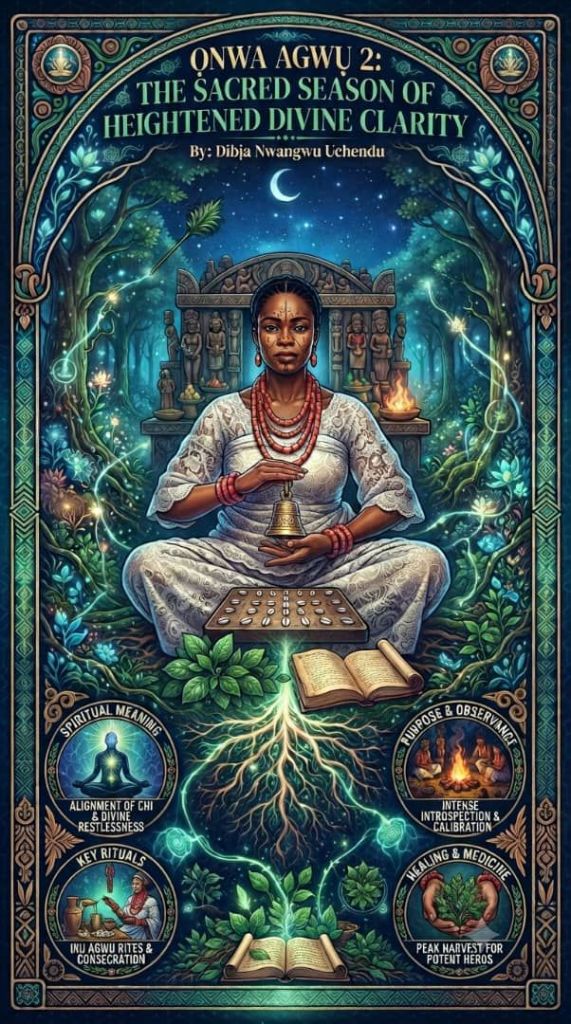
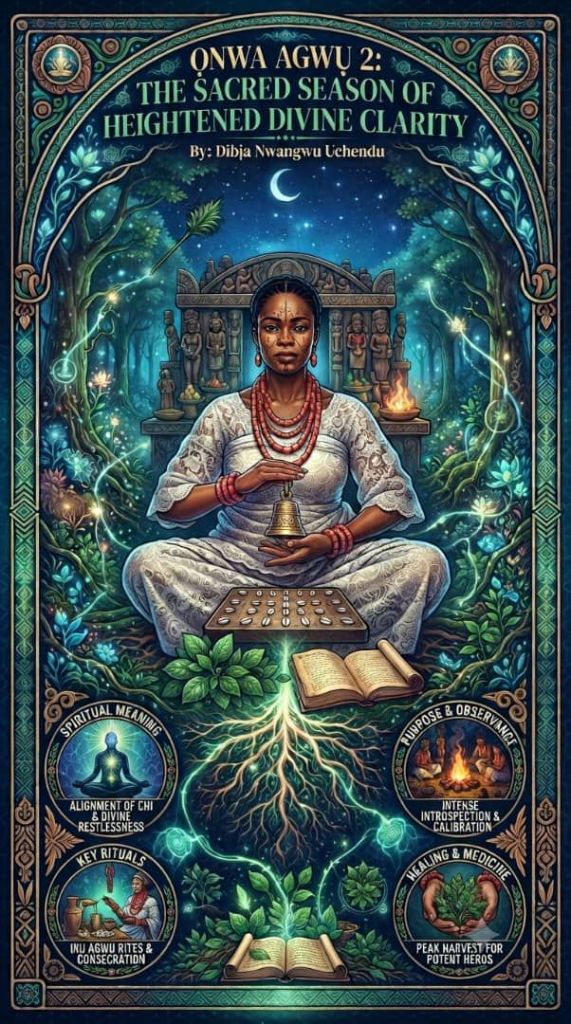
In Ọdịnana Igbo spirituality, the season of Ọnwa Agwụ is a time of heightened spiritual activity, particularly for the Dibia (traditional healers, diviners and priests). During this period, the connection between the physical and spiritual realms is believed to be exceptionally potent. This make it a critical window for spiritual work, medicinal preparation and ritual maintenance.
Traditional Rituals and Practices.
During Ọnwa Agwụ, the focus is on maintaining equilibrium with the Agwụ spirit: the patron of divination and herbal medicine. Rituals performed during this time include:
A. Iru Agwụ (Offering/Appeasement): This is a primary ritual where the Dibia honors their personal Agwụ spirit. It is performed to ensure the practitioner remains “in tune” with the spirit while maintaining the clarity required for divination and healing.
B. Spiritual Cleansing and Maintenance: The Dibia may perform purification rites for themselves and their shrines. This involves using specific ritual items to clear away stagnant or “confused” energy (mmuo mkpasa) that may have accumulated. Thus ensuring the Dibia’s “third eye” remains sharp.
C. Consecration of Tools: It is an auspicious time to re-consecrate divination tools (such as afa implements) and other sacred objects to strengthen the spiritual efficacy of those tools used in their practice.
Herbal Medicine and Spiritual Connection.
For the Dibia, Ọnwa Agwụ is the peak season for engaging with the “intelligence” of plants. In Ọdịnana, herbs are not just physical medicine, they are living beings with character and spiritual purpose.
▪️ Harvesting and Preparation: The Dibia uses this time to gather specific herbs and roots guided by intuition or direct revelation from the Agwụ spirit. Because the spiritual energy of the earth is believed to be peaking, plants harvested during this time are considered exceptionally potent.
▪️ The “Language” of Plants: A Dibia is expected to deepen their communication with plant life during this month. This involves observing how plants grow, their response to the environment and receiving spiritual insight into which herbs to combine for specific ailments.
▪️ Ritual Use: Beyond physical healing, herbs are used for spiritual purposes such as making incenses, amulets or cleansing baths to ward off negativity, attract prosperity or provide protection for the community.
Expectations of the Dibịa.
During Ọnwa Agwụ a Dibia is expected to live in heightened discipline:
1. Deepened Introspection: They must engage in personal reflection to ensure their own spirit is balanced, as Agwụ can be volatile if not properly managed.
2. Community Stewardship: They act as mediators performing rituals that restore harmony to the community. This includes offering sacrifices to ensure the community remains protected and that individual “restlessness” is channeled into constructive wisdom.
3. Mentorship: The season is ideal for teaching apprentices. The Dibia passes down esoteric knowledge, including the “rules” of various plants and the secrets of divination, ensuring the continuity of the tradition.
Summarily, Ọnwa Agwụ is the Dibia’s “field season.” It is a time to honor the ancestral and natural spirits that grant them the authority to heal, ultimately reinforcing their role as the primary custodians of physical and spiritual well-being in the community.
@dibianwangwuuchendu
WhatsApp MSG only.
+2349071050844